



The Fate Of Nettie B
The Fate Of Nettie B
by Bobbie Shafer of Troup, TX
When I was a small child we lived on a 600 acre farm in a small scattered community of Wildwood and my grandfather, Daddy Joe ran a small general store. Wildwood was about twenty-five miles from the nearest town and although the general store did a fairly good business, Daddy Joe insisted on farming several hundred acres behind their house. My parents and I lived in an apartment above the store and my grandparents lived in a small rock farm house on the hill behind the store. The only way to get to the apartment was a bridge built from the hill to the apartment. My dad worked at a glass factory and helped with the farming and running the store on his days off, and Mother and Grandma ran the households and helped out at the store.
This was in the early forties and many food items were rationed and so was gasoline. Although many farmers of large farms used tractors, the majority of the small farmers, such as ours, used plow horses, mules, or oxen.
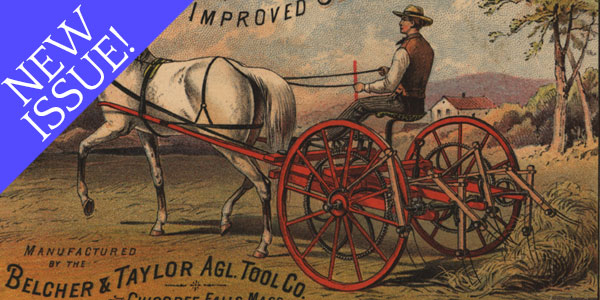
Our fields were plowed by Nettie B, a huge, gray-colored, plow horse that we had bought from a farmer that had owned her for more than fifteen years. She was named Nettie by the man who had owned her before, but Daddy Joe added the B, for Babe, who had been a plow horse when he was a child. Nettie might be old in years, but she was big, faithful, and was always anxious each morning to go to the fields and turn up the sandy soil.
I was usually the first to see Nettie every morning. I loved that old gray mare. I would fill my pockets with carrots or apples and sometimes pieces of leftover biscuits and sit on the fence and feed her as I told her of the latest western adventure I’d seen at the Ritz Theater the last Saturday I’d gone. Nettie was about seventeen hands high and so wide across her back that my legs stuck straight out to the sides when I rode her. Most of the time Daddy Joe would sit me on her back after hooking up the plow and up and down the rows we’d go, me singing “I’m an Old Cowhand” and Nettie patiently putting one foot in front of the other as her ears flicked back and forth as I sang.
We used Nettie B for about three years when Daddy Joe noticed one morning that she seemed a little slow and balky.
As he harnessed her up, Nettie shifted her weight from left to right and after checking her hooves carefully and finding them in good shape, off to plow we went. This particular day I hadn’t made it to the barn before Daddy Joe had, so instead of riding her, I walked along beside her and broke off pieces of carrots and fed it to her as she walked along. Soon she was acting normally and we forgot about her strange behavior.
It was about two weeks later when Daddy Joe decided to plow up a small garden near the house for Grandma. The ground had been plowed earlier, but needed loosening up and so Nettie B was harnessed up and once again she seemed a little reluctant to begin plowing. Although her hooves were clear of cracks and there was no swelling, Daddy Joe worried about her health. He only plowed a couple of rows before unhooking the plow and leading Nettie B back to the barn where we both brushed her down and gave her an extra handful of oats.
My grandfather hurried down to the store as it was nearing lunchtime and many farmers, truckers, and local workers stopped in for Grandma’s fresh ham sandwiches and one of her famous fried apple or peach pies. After the rush was over, he called Dr. Burgess, the local veterinarian, and asked him to stop by and check Nettie B When the vet asked what seemed to be the trouble Daddy Joe told him she just wasn’t acting herself and seemed to feeling poorly.
Dr. Burgess came out the very next day and Daddy Joe and I hovered around anxiously as he ran his hands over Nettie B, looked in her mouth, took her temperature, gazed in her eyes, and lifted each leg and fingered her muscles and joints. When he was through, he stripped off his elbow length gloves and put all his instruments away. He patted Nettie B. on her shoulder and scratched her forehead before turning to my grandfather.
“She’s pretty old, you know, Joe,” the vet said solemnly.
“Yep, about eighteen, I guess,” Daddy Joe said thoughtfully.
“Well, that’s not ancient, but she’s not a spry filly any more,” Dr. Burgess said, rubbing Nettie B’s nose.
“Nope,” my grandfather agreed.
“I’m afraid, however, she’s come to the end of her working days,” the vet said softly. “Her joints are tender and slightly enlarged. Her muscle mass has softened. She’s still mentally alert but her poor old body is just getting wore out.”
“I thought that might be it,” Daddy Joe admitted. “Old age I can live with, but I wanted to make sure it wasn’t something that could be fixed.”
“In this day and time,” Dr. Burgess murmured, “I realize feeding and caring for an old, useless animal is sometimes too hard on the pocketbook. If you want, I can take her and put her down at my place. I’ll take care of everything.” He walked over to Nettie B and stroked her neck.
I’d never seen my grandfather look so shocked. His eyes widened and his mouth went slack. He blinked a couple of times, licked his lips, and said in a hoarse, whispered, voice, “What did you say?”
The vet turned around. “I said that I understood if you wanted to put her away.”
“What kind of vet are you, you heartless, old quack,” Daddy Joe snarled. “If they can’t pull a plow, lay eggs, or give milk, we should just put ‘em down? I never heard of such a thing. Nettie B. might be old, but then, so am I, but we got a lot of good years left. We have bad days, true, but we got some good ones, too and on those good days, we make the Good Lord proud.”
Before he could continue, Dr. Burgess held out his hand and took a couple of steps back. “Now, Joe, I don’t suggest any such things. I’ve got a whole pasture full of old horses, cows and some chickens and ducks that are good for nothing but just looking at. I wouldn’t put them down for a hundred dollars, but there are some folks that, well, that can’t hardly feed their family, much less an animal they can’t use. I was just giving you the option.”
“Death for just being old around here ain’t no option,” Daddy Joe declared. “Being old may not be fixable, but it’s not a death warrant.”
“I agree,” the vet said as he closed up his bag and started out of the barn. “Rub her knees and shoulders with liniment, wrap those knees up when it gets cold and she’ll be as well as can be expected.”
Daddy Joe nodded as he clenched his teeth through clamped jaws. He walked the vet down the hill, saw him to his truck and watched him drive away.
When he returned to the barn, he threw his arms around Nettie B’s neck and I could see tears in his eyes.
“It’s just old age, my girl,” he said softly. “I would fix it if I could, but I can’t. Just hang in there. When you feel better, you can take Bobbie here for a slow ride around the meadow, but for now, why don’t you just take it easy.”
Nettie B snuffed and snorted just as if she understood and didn’t like the diagnosis. Daddy Joe chuckled and said, “I’m not happy getting old either, old girl, but there ain’t nothing we can do.”
We hung around and fed her a couple carrots and Daddy Joe rubbed a strong smelling liniment on her knees and along the muscles in her shoulders. Nettie B slung her head back when she smelled the ointment, but put it back down when a carrot was offered.
When Daddy Joe sold the general store and farm a couple of years later when we moved into Palestine so I could start school. Nettie B was moved to Mr. Frank George’s farm out on the Rusk Highway, west of Palestine. We later bought a farm near the George Ranch and Nettie B came back to us.
Nettie B loved the back meadow of our farm and every once in a while, on her good days, we could see her trot and even gallop. Nettie B lived to be almost thirty-three before we lost her and although it was indeed to old age, it wasn’t because she had no purpose in life. As Daddy Joe always said, “every life has a purpose and not even fate can alter that.”